

When most people think about visiting the dentist, they picture routine check-ups, fillings, straighter teeth, or the occasional dental emergency. But modern dentistry has evolved far beyond simply treating teeth. What many patients don’t realise is that the way you breathe, the position of your tongue, the strength of your facial muscles, and the health of your airway all play a huge role in shaping your overall dental health.
If you mouth-breathe at night, snore, grind your teeth, feel tired in the morning, struggle with sleep apnoea, or notice issues such as a narrow palate or crowded teeth, these concerns may not be “just dental problems.”
Very often, they are signs of deeper orofacial muscle dysfunction—patterns that influence how the jaws develop, how the teeth sit, and how well you breathe throughout the day and while you sleep.
This is where Myofunctional Therapy comes in. It’s one of the most effective — yet still surprisingly overlooked — tools in modern, airway-focused dentistry. At Fortitude Valley Dentist, your trusted dentist in Brisbane, we take a holistic approach to oral health by looking at the entire system: the jaw, tongue, airway, breathing patterns, and facial muscles. Myofunctional therapy plays a vital role in helping patients achieve better breathing, better sleep, and long-term dental stability.
This comprehensive guide will walk you through everything you need to know, including:
- What myofunctional therapy is and how it works.
- How mouth breathing impacts your smile, health and facial growth.
- Why nasal breathing is essential for proper development and optimal health.
- How orofacial muscles influence your airway and sleep quality.
- The main signs you may benefit from therapy.
- What to expect during treatment.
- Who benefits most — children, teens, or adults.
- How myofunctional therapy complements orthodontics, sleep dentistry, and even procedures such as wisdom teeth removal when asleep.
Whether you’re exploring solutions for snoring, searching for a holistic dentist near me, or simply looking to improve your overall wellbeing, this guide will help you understand how myofunctional therapy can transform your smile — and your health — from the inside out.
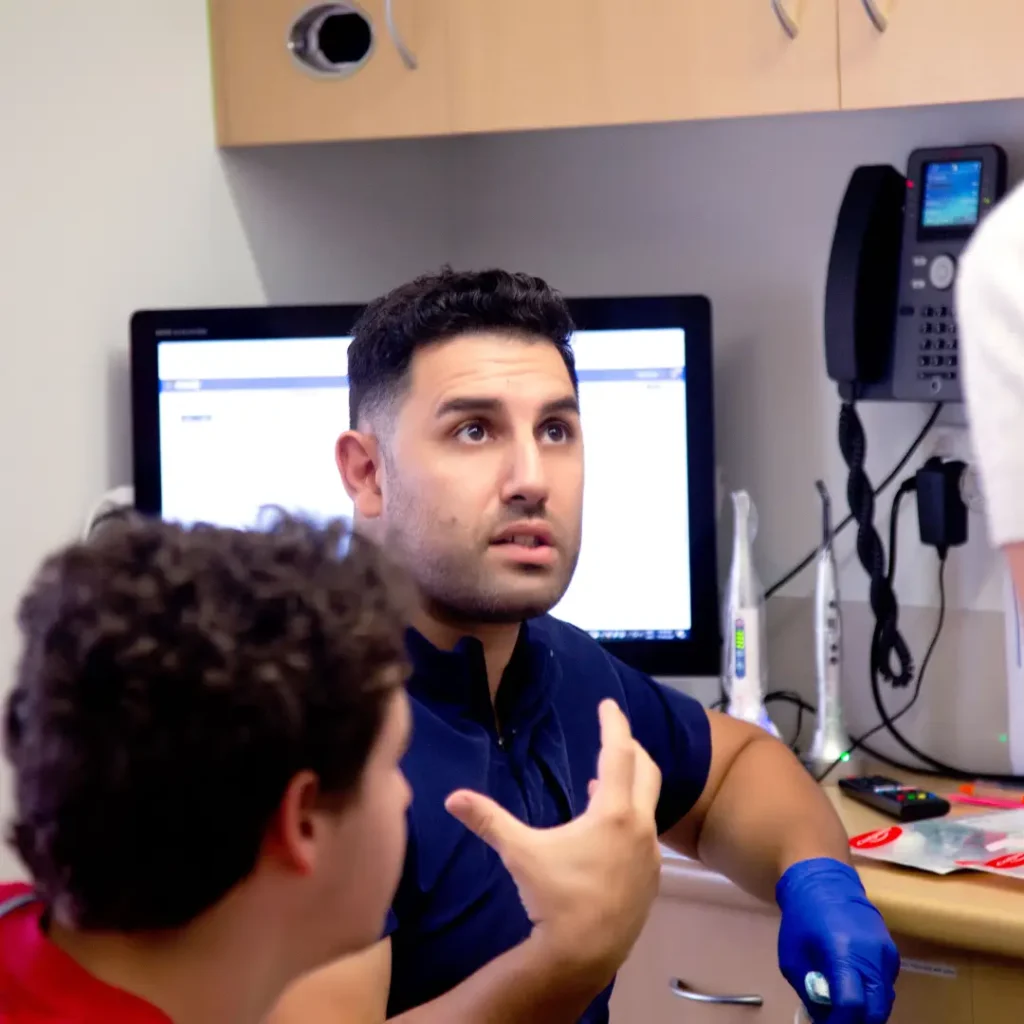
What Is Myofunctional Therapy?
Myofunctional Therapy is a specialised, structured program of gentle, targeted exercises designed to retrain the muscles of the face, tongue, lips and jaw so they function the way they were naturally meant to. Many people think of it as physiotherapy for the mouth and airway — and that’s exactly what it is.

These exercises help correct dysfunctional habits that can interfere with breathing, sleeping, speaking, chewing and even long-term dental alignment. When the muscles of the orofacial system don’t work properly, the consequences can be surprisingly widespread. Myofunctional therapy steps in to restore balance, strength and proper movement.
By improving muscle tone and correcting oral habits, myofunctional therapy supports:
- Better nasal breathing — promoting clearer airflow and healthier oxygen levels
- Improved tongue posture — essential for jaw development, airway stability and orthodontic success
- Efficient swallowing patterns — reducing strain on the teeth and facial muscles
- Balanced and healthier facial development — especially important for growing children
- Better sleep quality — by reducing airway collapse and mouth breathing at night
- Reduced snoring and sleep-disordered breathing
- More stable orthodontic outcomes, preventing teeth from shifting after braces
For many patients who search online for a holistic dentist in Brisbane, a reliable dental clinic near me, or a trusted Dentist in the Valley, myofunctional therapy offers a long-term solution to issues they never realised were connected to oral posture, airway health or the way their muscles function.
It is gentle, completely non-invasive, and suitable for children, teens and adults — making it one of the most powerful tools in modern airway-focused dentistry.
The Four Essential Foundations of Myofunctional Therapy
1. Nasal Breathing (Not Mouth Breathing)
Nasal breathing is the cornerstone of healthy oral function and overall wellbeing.
While it may seem like a simple habit, the way you breathe has a powerful influence on your airway, sleep quality, facial development and even long-term dental stability.
Breathing through the nose, not the mouth, provides essential benefits such as:
- Filtering dust, allergens and pathogens
The nose acts as a natural air purifier, protecting your lungs and immune system. - Warming and humidifying the air
This helps prevent irritation in the throat and airway, especially during sleep. - Supporting airway stability
Nasal breathing encourages the tongue to rest in the correct position — high against the palate — helping keep the airway open. - Reducing snoring
Proper airflow lowers the risk of vibrations in the airway that cause snoring. - Protecting the mouth from dryness and tooth decay
Mouth breathing dries out saliva, increasing cavity risk and gum irritation. - Helping regulate blood pressure
Nasal breathing boosts nitric oxide production, supporting healthy circulation. - Improving oxygen absorption
Your body extracts oxygen more efficiently through nasal breathing, which enhances energy levels and cognitive focus.
Children and adults who mouth-breathe often experience poor sleep, chronic fatigue, reduced concentration, behavioural challenges, and dental crowding. These are common issues we see every week at Fortitude Valley Dentist, especially among patients who come to us after searching for a dentist in Brisbane or a dental clinic near me to help with ongoing sleep or orthodontic concerns.
Myofunctional therapy helps retrain these breathing patterns so the body can function the way it was designed to — naturally, comfortably and efficiently.
2. Correct Tongue Posture
Correct tongue posture is one of the most important — yet most overlooked — elements of oral and airway health.
In an ideal resting position, the entire tongue should sit gently and fully sealed against the roof of the mouth, with the tip resting just behind the upper front teeth (but not touching them), and the lips closed.
When the tongue rests in this healthy position, it:
- Supports wide palate development
A properly positioned tongue acts like a natural expander, shaping the upper jaw and promoting balanced facial growth — especially in children. - Helps teeth remain straight
The tongue stabilises the dental arch, reducing the likelihood of crowding or narrowing. - Prevents orthodontic relapse
Even after braces, the tongue’s posture determines whether the teeth stay where they should or slowly shift out of place. - Maintains a healthy, open airway
A lifted tongue helps prevent the airway from being crowded or restricted. - Reduces snoring and sleep apnoea
When the tongue sits low or falls back during sleep, it can partially block the airway. A proper tongue posture reduces this risk.
When the tongue is improperly positioned — sitting low, pushing forward, or falling backward — it can contribute to:
- Narrow jaws
- Crowded teeth
- A restricted airway
- Mouth breathing
- Snoring
- Sleep-disordered breathing
- Orthodontic problems in children and adults
It can even make certain dental treatments more challenging. For example, patients with low tongue posture may have difficulty tolerating wisdom removal, sleep dentistry devices, or oral appliances used to support nighttime breathing.
This is why so many patients who come to us after searching for a dentist in Brisbane, Dentist in the Valley, or a dental clinic near me benefit from tongue posture training as part of their treatment plan.
Correcting tongue posture early — or even later in life — can dramatically improve oral stability, facial harmony, breathing and sleep.
3. Proper Swallowing Patterns
Swallowing is something we do thousands of times a day — yet most people don’t realise there is a right and wrong way to do it.
A correct, healthy swallow involves the tongue gently pressing upward against the palate, rather than pushing forward against the teeth. The lips stay relaxed and closed, and the facial muscles remain calm.
When the tongue moves incorrectly during swallowing — a pattern known as tongue thrust — it can create a range of dental and functional problems, including:
- Open bites
The teeth don’t meet properly because the tongue repeatedly pushes between them. - Protruding or flared teeth
Forward pressure from the tongue gradually shifts the front teeth outward. - Speech difficulties
Tongue thrust can interfere with sounds like /s/, /sh/, /ch/, /t/ and /d/. - Teeth shifting after braces
Even after orthodontic treatment, an incorrect swallow can cause relapse and undo months or years of progress.
Because swallowing happens so frequently — often 1,000 to 2,000 times per day — even a small dysfunctional movement can have a major impact over time.
Myofunctional therapy gently re-educates the muscles, training the tongue to move upward rather than forward, helping restore a proper, efficient swallowing pattern. This not only protects orthodontic results but also supports better breathing, clearer speech and improved long-term oral stability.
For many patients who come to Fortitude Valley Dentist — whether they searched for a dentist in Brisbane, Dentist in the Valley, or a dental clinic near me — correcting swallowing patterns becomes a key part of achieving lasting dental and airway health.
4. Adequate Lip Seal
A proper lip seal — where the lips remain softly closed at rest — is a key indicator of healthy oral function. It supports nasal breathing, helps maintain correct tongue posture, and encourages balanced jaw development.
When the lips stay closed naturally, the body is more likely to breathe through the nose, which benefits the airway, sleep quality and dental health.
However, if a child or adult habitually keeps their lips apart, even when relaxed, it may be a sign of deeper functional concerns such as:
- Airway restrictions
Narrow nasal passages, enlarged tonsils or chronic congestion can make nasal breathing difficult. - Allergies or sinus issues
Seasonal allergies or long-term sinus problems often force individuals to breathe through the mouth. - Myofunctional dysfunction
Weak lip muscles, low tongue posture or incorrect swallowing can make it difficult to maintain a natural lip seal.
A chronic open-mouth posture can lead to:
- Dry mouth and increased cavities
- Changes in facial appearance (long, narrow features)
- Gum inflammation
- Snoring
- Poor sleep quality
- Altered jaw alignment
- Speech challenges
At Fortitude Valley Dentist, we often see patients who come in after searching for a dentist in Brisbane or a dental clinic near me because of repeated cavities, snoring issues, mouth breathing or orthodontic concerns — only to find that the root cause is a lack of proper lip seal.
Myofunctional therapy helps strengthen the lips and surrounding facial muscles, making it easier to maintain a natural, comfortable lip seal. This simple habit plays a crucial role in supporting long-term airway health, jaw stability and overall facial balance.
Why Orofacial Muscle Function Matters More Than You Think
Every breath you take, every bite you chew, and every swallow you make activates a complex network of orofacial muscles. These muscles work together to support breathing, chewing, swallowing, speaking and even proper facial development.
When this system functions well, everything feels effortless.
But when even one part of this system is out of balance, the effects can be surprisingly widespread — impacting your smile, your sleep, your posture and your overall wellbeing.
This is why understanding orofacial muscle function is a key part of airway-focused dentistry at Fortitude Valley Dentist.
Common Orofacial Myofunctional Disorders (OMDs)
Orofacial Myofunctional Disorders can appear in both children and adults and often develop slowly over time. Some of the most common include:
- Mouth breathing
- Tongue thrusting (forward tongue movement during swallowing)
- Snoring
- Sleep-disordered breathing including obstructive sleep apnoea
- Incorrect tongue posture
- Open-lip posture (lips apart at rest)
- Thumb or finger sucking
- Difficulty breathing through the nose
- One-sided chewing habits
- A narrow palate or crowded teeth
Even seemingly harmless habits like nail biting, chewing on pens, or resting your chin on your hand can gradually influence muscle tone and disrupt facial symmetry.
These dysfunctions can contribute to:
- Crooked or shifting teeth
- Jaw pain or tightness
- Poor sleep quality
- Snoring and fatigue
- Speech difficulties
- Orthodontic relapse
- TMJ issues
- Narrow airway development in children
Because the symptoms often appear dental — crowded teeth, mouth breathing, clenching, cavities from dry mouth — many people seek help by searching online for:
- dentist near me
- emergency dentist brisbane
- dental emergency dentist near me
- emergency dentist close to me
However, the real cause may be rooted in dysfunctional muscle patterns rather than isolated dental issues. Without addressing these underlying habits, problems tend to recur or worsen.
Myofunctional therapy helps correct these patterns at their source, supporting long-term stability, healthier breathing and improved dental outcomes.
How Mouth Breathing Affects Your Smile and Overall Health
Most people don’t realise they mouth-breathe — especially at night. It can seem like a harmless habit, but long-term mouth breathing affects far more than just the way you breathe. It impacts your oral health, facial development, sleep quality, and even your behaviour and energy levels. At Fortitude Valley Dentist, we see first-hand how mouth breathing contributes to many of the concerns people come to us with: crowded teeth, snoring, fatigue, repeated cavities, orthodontic problems, and jaw development issues in children.
Over time, chronic mouth breathing can dramatically change the way the face and jaw grow, especially in younger patients.
Effects of Chronic Mouth Breathing Include:
- Narrow palate and crowded teeth
Without the tongue supporting the palate, the upper jaw becomes narrow and teeth crowd together. - Snoring
Mouth breathing increases airway collapse, making snoring more likely. - Increased risk of sleep apnoea
Poor airway stability can lead to repeated breathing pauses during sleep. - Low tongue posture
A low-resting tongue affects jaw development and reduces airway space. - Dry mouth and cavities
Mouth breathing dries the saliva, increasing tooth decay and gum irritation. - Gum inflammation
Dry, irritated gums are more prone to soreness, redness, and swelling. - Poor oxygen absorption
Nasal breathing delivers oxygen more efficiently than mouth breathing. - Forward head posture
The body compensates for restricted airflow by jutting the head forward. - Weak facial muscles
Lack of lip and cheek engagement weakens facial tone. - Dark under-eye circles
Often linked to chronic nasal obstruction and poor airflow. - Speech difficulties
Incorrect tongue placement impacts pronunciation and clarity. - Behavioural challenges (in children)
Poor sleep quality can lead to irritability, difficulty focusing, and hyperactivity. - Slower or altered jaw growth
Mouth breathing disrupts normal facial growth patterns, often making future orthodontic treatment more complex.
Adenoid Face in Children
In children, chronic mouth breathing can lead to a well-recognised facial growth pattern referred to as “adenoid face.” This is not a medical diagnosis, but a descriptive term used to explain the structural changes caused by prolonged mouth breathing.
Children with this pattern often show:
- A long, narrow face
- Open lips at rest
- A recessed or underdeveloped chin
- Weak or flattened cheek muscles
- Dark circles under the eyes
These structural changes are not just cosmetic — they reflect underlying airway and muscle dysfunction. Without early intervention, these children often develop speech difficulties, orthodontic problems, sleep issues, and reduced confidence due to the appearance of their smile and facial shape.
How Myofunctional Therapy Helps
Myofunctional therapy is one of the most effective, non-invasive ways to rehabilitate breathing patterns and restore proper muscle function. By retraining habits such as tongue posture, lip seal, swallowing patterns and nasal breathing, this therapy helps:
- Improve airflow and reduce snoring
- Support proper jaw and facial development
- Restore correct oral posture
- Reduce the risk of orthodontic relapse
- Improve sleep and daytime energy
- Enhance overall dental and airway health
For children, early intervention can dramatically change facial growth patterns, reducing the need for complex orthodontic treatment later in life.
For adults, correcting mouth breathing can significantly improve sleep quality, reduce fatigue, and support long-term dental stability.
Why Nasal Breathing Is So Important
Proper breathing begins with the nose — not the mouth.
Nasal breathing helps:
- Filter and humidify air
- Improve oxygen delivery
- Reduce snoring
- Support facial development
- Reduce dental decay
- Maintain healthy tongue posture
- Improve sleep and behaviour
- Regulate blood pressure and nervous system balance
When patients switch from mouth breathing to nasal breathing, improvements are often seen in sleep quality, energy, digestion and cognitive function.
Why Nasal Breathing Is So Important
Proper, healthy breathing begins with the nose — not the mouth. While mouth breathing may seem harmless or simply a habit, nasal breathing is essential for maintaining a healthy airway, supporting facial development and ensuring your body receives the oxygen it needs to function at its best.
At Fortitude Valley Dentist, we see nasal breathing as a foundation for long-term oral and overall health. When the nose does its job, the entire body benefits.
Nasal breathing helps to:
- Filter and humidify air
The nose traps dust, allergens and pathogens while warming and moisturising the air before it reaches the lungs — something the mouth simply cannot do. - Improve oxygen delivery
Nasal breathing increases nitric oxide production, allowing your body to absorb oxygen more efficiently. - Reduce snoring
Mouth breathing contributes to airway collapse at night, while nasal breathing helps keep the airway more stable. - Support facial development
In children, nasal breathing encourages proper tongue posture and helps shape the palate and jaws the right way. - Reduce dental decay
Mouth breathing dries out the saliva, increasing cavity risk. Nasal breathing keeps the mouth moist and protected. - Maintain healthy tongue posture
When you breathe through your nose, the tongue naturally rests on the roof of the mouth — supporting jaw growth and keeping the airway open. - Improve sleep and behaviour
Better airflow leads to deeper, more restorative sleep, which is essential for mood regulation, learning and concentration. - Regulate blood pressure and nervous system balance
Nasal breathing activates the parasympathetic (rest-and-digest) system, promoting calmness, focus and overall wellbeing.
The Power of Switching From Mouth Breathing to Nasal Breathing
When patients transition from mouth breathing to nasal breathing, the improvements are often remarkable. Many experience:
- Better sleep quality
- More energy during the day
- Reduced brain fog
- Improved digestion
- Fewer headaches
- Less snoring
- Calmer behaviour in children
- Better concentration and emotional regulation
- Decreased dental issues
For many people who come to us after searching for a dentist in Brisbane, dentist near me, or help with snoring and airway concerns, learning to breathe through the nose becomes a life-changing first step.
Myofunctional therapy is one of the most effective ways to retrain the body to return to healthy nasal breathing — gently, naturally and permanently.
Signs You Might Benefit from Myofunctional Therapy
Myofunctional therapy can be transformative for patients who struggle with sleep, breathing, facial development or ongoing dental issues that never seem to resolve fully. Many people who visit Fortitude Valley Dentist—whether for orthodontics, snoring, repeated cavities, jaw tension or even a general dentist in Brisbane appointment—don’t realise their symptoms are linked to dysfunctional oral muscle patterns.
You may be a strong candidate for myofunctional therapy if you notice any of the following:
Sleep & Breathing Concerns
- Snoring
A sign that airflow is obstructed during sleep. - Sleep apnoea
Pauses in breathing may be linked to low tongue posture or airway restriction. - Dry mouth on waking
Indicates mouth breathing at night, which increases decay risk. - Restless sleep
Tossing and turning often signals poor oxygen flow or airway instability. - Daytime sleepiness or fatigue
Even after a full night’s rest, poor breathing reduces sleep quality. - Grinding or clenching
Many people clench their teeth as the body attempts to stabilise the airway during sleep. - Mouth breathing
One of the strongest indicators that myofunctional therapy is needed.
Dental & Orthodontic Issues
- Crooked or crowded teeth
Often linked to low tongue posture and a narrow palate. - Teeth shifting after braces
A clear sign that muscle function was not addressed during orthodontic treatment. - Open bite or overbite
Frequently associated with tongue thrust or mouth breathing habits. - Narrow palate
Often caused by chronic mouth breathing, especially in childhood. - Frequent cavities
Usually related to dry mouth and reduced saliva from mouth breathing. - Tongue thrust
Improper swallowing patterns push teeth out of alignment.
Facial or Habitual Signs
- Lips apart at rest
Suggests difficulty maintaining a natural lip seal. - Low tongue posture
One of the primary contributors to airway and orthodontic problems. - Forward head posture
A compensatory behaviour to improve airflow when breathing is compromised. - Difficulty breathing through the nose
Often linked to allergies, enlarged tonsils, or airway restrictions. - Thumb or finger sucking
A habit that can narrow the palate and affect facial development. - Speech difficulties
Incorrect tongue placement affects clarity of certain sounds.
What To Do If These Symptoms Sound Familiar
If two or more of these signs apply to you or your child, it’s a strong indication that an airway-focused dental assessment is recommended.
At Fortitude Valley Dentist, we go beyond traditional dentistry by looking at breathing patterns, facial muscles, swallowing function and tongue posture—not just the teeth. This holistic approach helps us identify the root cause of problems that might otherwise be overlooked in standard dental care.
Myofunctional therapy provides a gentle, effective way to resolve these concerns naturally and sustainably, helping patients breathe better, sleep better, and enjoy healthier, more stable smiles.
How Myofunctional Therapy Works
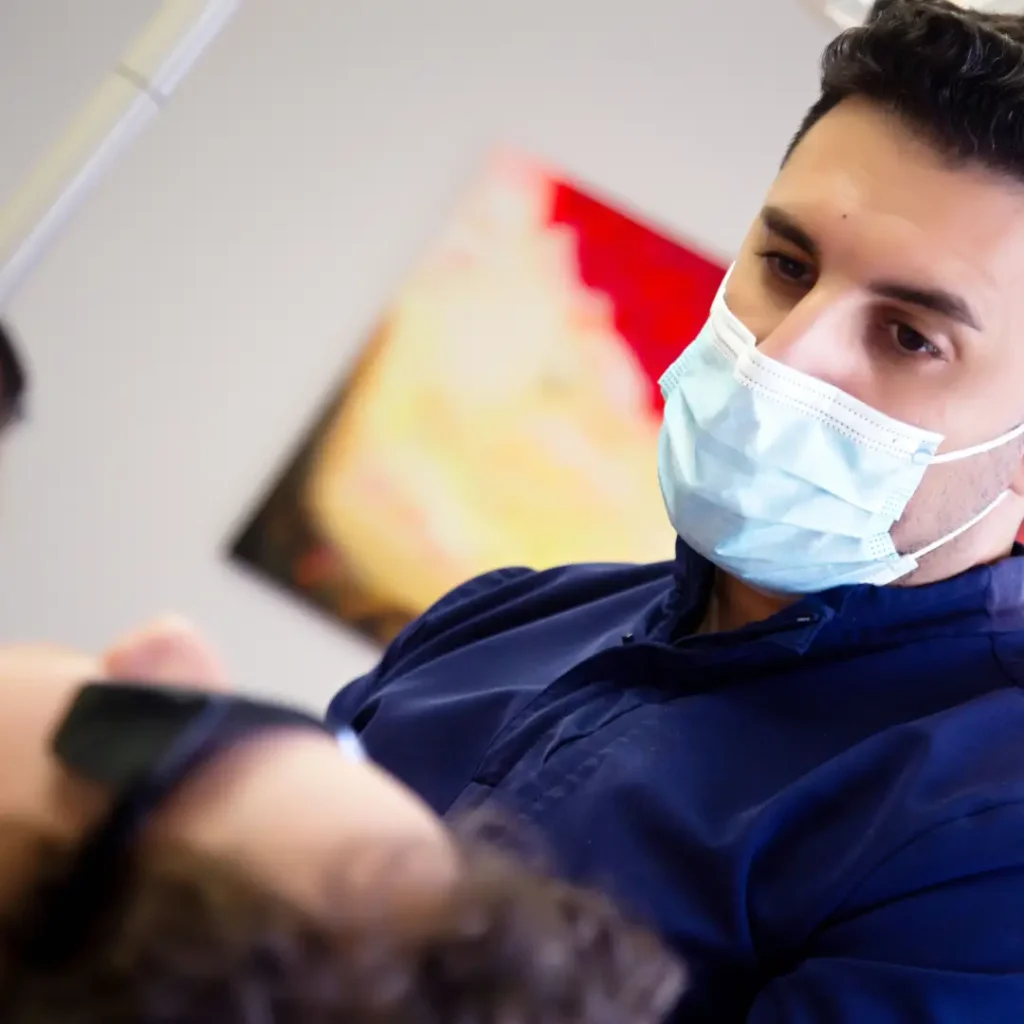
Myofunctional therapy is gentle, structured and completely personalised. No two patients have the same oral habits or airway concerns, which is why each program at Fortitude Valley Dentist is tailored to your specific needs — whether you’re dealing with mouth breathing, snoring, speech challenges, orthodontic relapse or sleep-disordered breathing.
A typical myofunctional therapy program focuses on retraining and strengthening the muscles that support your breathing, swallowing, posture and overall oral function.
Here’s what it usually includes:
- Tongue strengthening
Exercises that help the tongue rest high against the palate, improving airway stability and reducing snoring. - Lip and cheek training
Builds adequate lip seal and facial muscle tone, supporting nasal breathing and balanced facial posture. - Nasal breathing exercises
Techniques that encourage smooth, efficient nasal airflow—essential for sleep quality, oxygen absorption and healthy development. - Correct swallowing retraining
Replaces tongue thrusting or incorrect swallowing habits with a healthy, upward swallow. - Habit elimination
Addresses habits such as thumb sucking, mouth breathing, nail biting or forward head posture that can disrupt oral development. - Airway-supportive postures
Encourages proper head, tongue and jaw positioning to keep the airway more open during the day and while sleeping.
Because myofunctional therapy works with muscle memory, consistency is key. Sessions typically run weekly or fortnightly, depending on the patient, and include simple, short daily exercises that can be done at home in just a few minutes.
Most people begin to see improvements within a few weeks — better breathing, better sleep, improved comfort and far greater awareness of oral habits that once went unnoticed.
Who Can Benefit From Myofunctional Therapy?
Myofunctional therapy is suitable for all ages, from young children to adults, because oral muscle function affects every stage of growth and health. Whether someone struggles with breathing issues, orthodontic relapse, poor sleep, speech challenges, or chronic fatigue, this therapy provides a gentle, non-invasive way to correct the underlying habits driving those concerns.
Children
Children tend to respond especially well to myofunctional therapy because their muscles and bones are still developing. Early intervention creates lasting change.
Myofunctional therapy for children helps to:
- Correct mouth breathing early
Preventing long-term issues such as narrow jaws, facial changes and sleep problems. - Promote healthier jaw growth
Proper tongue posture widens the palate naturally and supports balanced facial development. - Enhance speech
Correct tongue placement improves clarity and articulation for many children. - Prevent future orthodontic complications
Proper oral function helps reduce the need for complex or repeated orthodontic treatment. - Improve sleep and behaviour
Healthy breathing during sleep supports emotional regulation, focus and daytime energy.
This makes myofunctional therapy a powerful tool for parents seeking early solutions before orthodontics become more complicated.
Teens
Teenagers often benefit from myofunctional therapy when undergoing — or finishing — orthodontic treatment. At this age, habits are still changeable and the facial structure is still developing.
Myofunctional therapy for teens helps to:
- Stabilise orthodontic results
Muscle dysfunction is a major reason teeth shift after braces. Therapy addresses the cause, not just the symptoms. - Correct tongue thrust and open bites
Teens often develop swallowing or tongue-posture habits during growth spurts. - Support airway development
Improved breathing leads to better sleep, focus and overall wellbeing during a crucial developmental stage.
Myofunctional therapy also boosts confidence by improving facial balance and breathing — areas teens care deeply about.
Adults
Adults often come to myofunctional therapy after years of symptoms they assumed were “normal” — such as poor sleep, snoring, mouth breathing, headaches or jaw tension. Many only discover functional issues after searching for help from a dentist in Brisbane, a dentist near me, or even an emergency dentist near me when symptoms worsen.
Myofunctional therapy for adults helps to:
- Reduce snoring and sleep apnoea severity
Strengthened tongue and facial muscles help keep the airway open naturally. - Improve daytime energy levels
Better sleep = clearer thinking, improved mood and higher productivity. - Reduce TMJ pain and jaw tension
Correcting tongue and swallowing patterns alleviates chronic strain. - Prevent orthodontic relapse
Many adults seek treatment years after braces because their teeth have shifted. - Improve posture and reduce neck strain
Proper airway alignment helps restore natural head and neck posture. - Enhance the effectiveness of sleep appliances
Oral appliances or CPAP often work better when the muscles supporting the airway function properly.
Adults are often amazed by how much better they breathe, sleep and feel once these lifelong habits are corrected.
How Myofunctional Therapy Supports Wisdom Teeth & Other Dental Treatments
While the focus is on airway and muscle function, these habits also play a significant role in how you experience various dental treatments.
Teeth Removal & Wisdom Teeth Extraction
Poor tongue posture and narrow jaws can contribute to insufficient space for wisdom teeth. Patients often ask:
- “How much is wisdom teeth removal?”
- “Do I need wisdom extraction?”
- “Can I get Wisdom Teeth Removal when asleep?”
At Fortitude Valley Dentist, we guide patients through both myofunctional therapy and wisdom removal considerations to ensure long-term oral health.
How Myofunctional Therapy Supports Wisdom Teeth & Other Dental Treatments
Although myofunctional therapy is primarily known for improving breathing, sleep and oral muscle function, it also plays a surprisingly important role in preparing for — and recovering from — various dental treatments.
Many of the habits that myofunctional therapy targets, such as low tongue posture or chronic mouth breathing, directly influence jaw size, tooth alignment and the amount of space available for wisdom teeth.
Teeth Removal & Wisdom Teeth Extraction
A narrow jaw or underdeveloped palate is one of the most common reasons patients experience impacted or painful wisdom teeth. These structural issues are often linked to:
- Low tongue posture
- Mouth breathing
- Poor muscle tone in the cheeks and lips
- Disrupted swallowing patterns
Because these habits affect how the jaws grow, many people simply don’t have enough space for their wisdom teeth to erupt naturally.
This leads patients to frequently ask:
- “How much is wisdom teeth removal?”
- “Do I need wisdom extraction?”
- “Can I get Wisdom Teeth Removal when asleep?”
These are common questions we hear at Fortitude Valley Dentist, especially from adults who have experienced years of crowding, discomfort or recurring infections.
Where Myofunctional Therapy Fits In
Myofunctional therapy can support wisdom teeth treatments in several important ways:
- Improving tongue posture may support healthier jaw stability, which reduces the risk of post-extraction crowding.
- Strengthening the lips, cheeks and tongue helps patients maintain better oral posture during healing.
- Correcting mouth breathing reduces dry mouth, which lowers bacteria levels and can support easier recovery.
- Improving swallowing patterns helps reduce pressure on healing tissues after extraction.
- For younger patients, therapy may support better jaw development, sometimes reducing the severity of future wisdom teeth issues.
While myofunctional therapy won’t eliminate the need for wisdom teeth removal in all cases, it complements the process beautifully by addressing the root habits that influence jaw shape and crowding.
At Fortitude Valley Dentist, we guide patients through both myofunctional therapy and wisdom teeth removal considerations to ensure the healthiest, most stable long-term outcome. Whether you choose wisdom teeth extraction in-chair or prefer Wisdom Teeth Removal when asleep, improving oral muscle function supports a smoother experience and better long-term results.
Ready to Improve Your Breathing, Sleep and Smile?
Your airway, facial muscles and dental health are connected far more deeply than most people realise. When any part of this system isn’t functioning well, it can affect everything — from the way you breathe and sleep to how your jaws grow, how your teeth align and how confidently you smile.
The good news is that these habits can be corrected.
With myofunctional therapy, you can retrain your mouth and airway to work in harmony, supporting better sleep, easier breathing, improved posture and long-term dental stability. Whether you’re dealing with mouth breathing, snoring, orthodontic relapse, fatigue or concerns about your child’s development, the right treatment can be life-changing.
Take the First Step Toward Better Health Today

If you’re ready to transform the way you breathe, sleep and feel, our team is here to help.
Book your myofunctional therapy consultation with Fortitude Valley Dentist today.
📞 (07) 3544 7777
🌐 fortitudevalleydentist.com.au
📍 Fortitude Valley, Brisbane
Breathe better. Sleep better. Smile better — starting now.
